Mark Bridge: not him, the other one
Get social
  • Home
  • Writing
  • Photo and video
  • Music and podcasting
  • Social networking
  • Showcase

Design Specific

1/1/2016

0 Comments

 
Richard Fletcher and John Walters
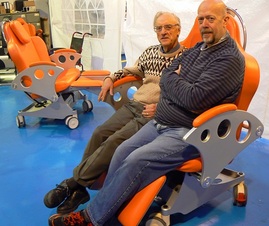
On a small industrial estate at the edge of Ringmer is a company that proudly claims to produce the widest range of wheelchair platforms and recliners in the world. For example, they make a portable device that tilts a patient in a wheelchair, enabling that person to receive dental treatment without being transferred onto a dentist’s couch. And there are motorised chairs that’ll adjust to fit bariatric patients weighing over 50 stone, making it easier for medical staff to transfer and treat people on a single piece of equipment. It means undignified and potentially dangerous hoists can be confined to the past.
 
The company was born from a project at the University of Brighton. Richard Fletcher was leading the MSc Product Innovation and Design course when a London hospital asked for help designing a wheelchair recliner platform. Not only did Richard’s solution win an award, it led to the creation of his own business almost 16 years ago. He’s CEO of Design Specific Ltd, working with a dedicated staff of five who cover all technical aspects as well as marketing and support.
 
In its way, Design Specific is a very traditional firm. Every new product starts with a pencil-drawn sketch. Components are ordered from local suppliers where possible, with all assembly – including circuit boards – taking place on site. Yet the results are perfectly suited to 21st-century medicine. Instead of inconvenient cables and noisy motors, there are silky-smooth castors, rechargeable batteries and quiet hydraulic lifts. What’s most notable about the products is how attractive they are. “We like to make things that look good”, Richard explains. “You can have style as well as function.” Meanwhile John Walters, Design and International Marketing Manager, talks about a compliment he was paid at a European trade show. “The Germans said ‘It looks German’. That was high praise, as far as I was concerned.”
 
Last year, Design Specific won the coveted Award for Business Innovation during the Lewes District Business Awards. The company sells its products around the world, so why did it enter a local competition? “I don’t chase awards”, Richard tells us. “It was for everyone here. These guys work hard, they put a lot in. I wanted to give their efforts an airing.”
 
“Some people who look at our chairs wouldn't say that's innovation. I think it's innovation because it's a development of something that's never existed before in that form.”
 
And what’s planned for 2016? Richard points to the motorised ‘fifth wheel’ hidden underneath their latest bariatric conveyance chair. At the moment it’s ordered from Germany but will soon be replaced with a home-grown design. “They use cams; we'll be using linear drives. We’ve done a lot of sketches.”
 
Design Specific, Caburn Enterprise Park, The Broyle, Ringmer BN8 5NP
01273 813904

 
First published in Viva Lewes magazine issue 112 January 2016

0 Comments

A new life for the Phoenix

16/12/2015

 
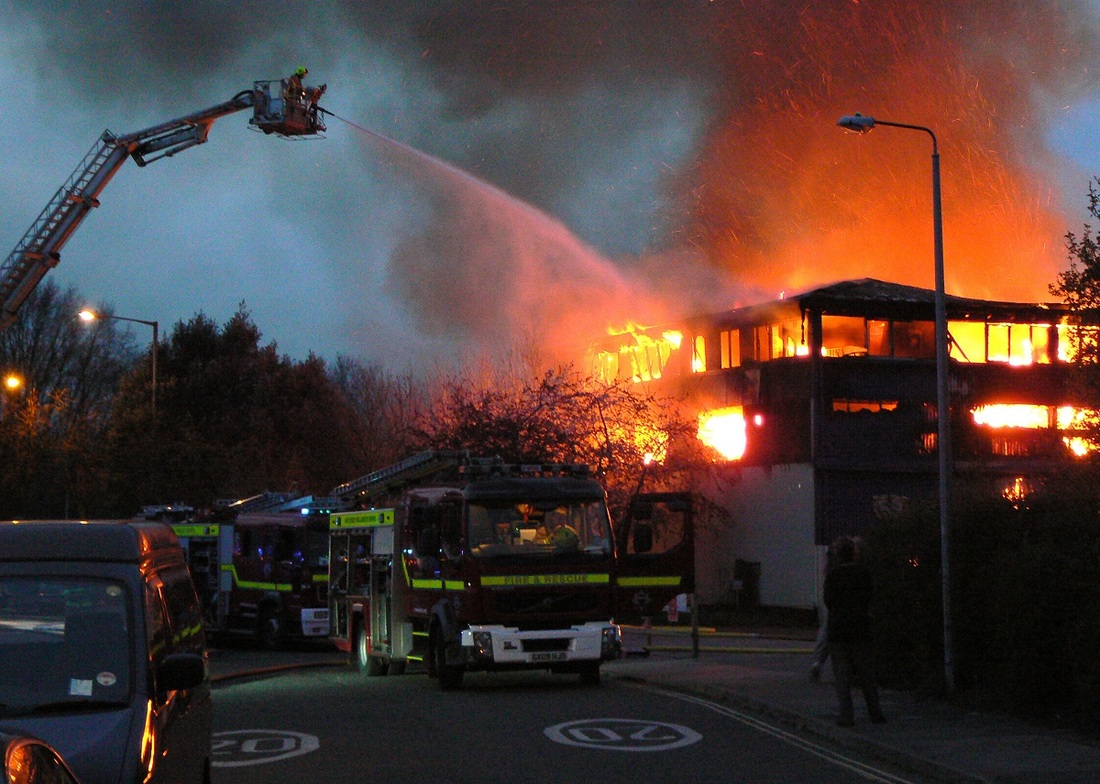
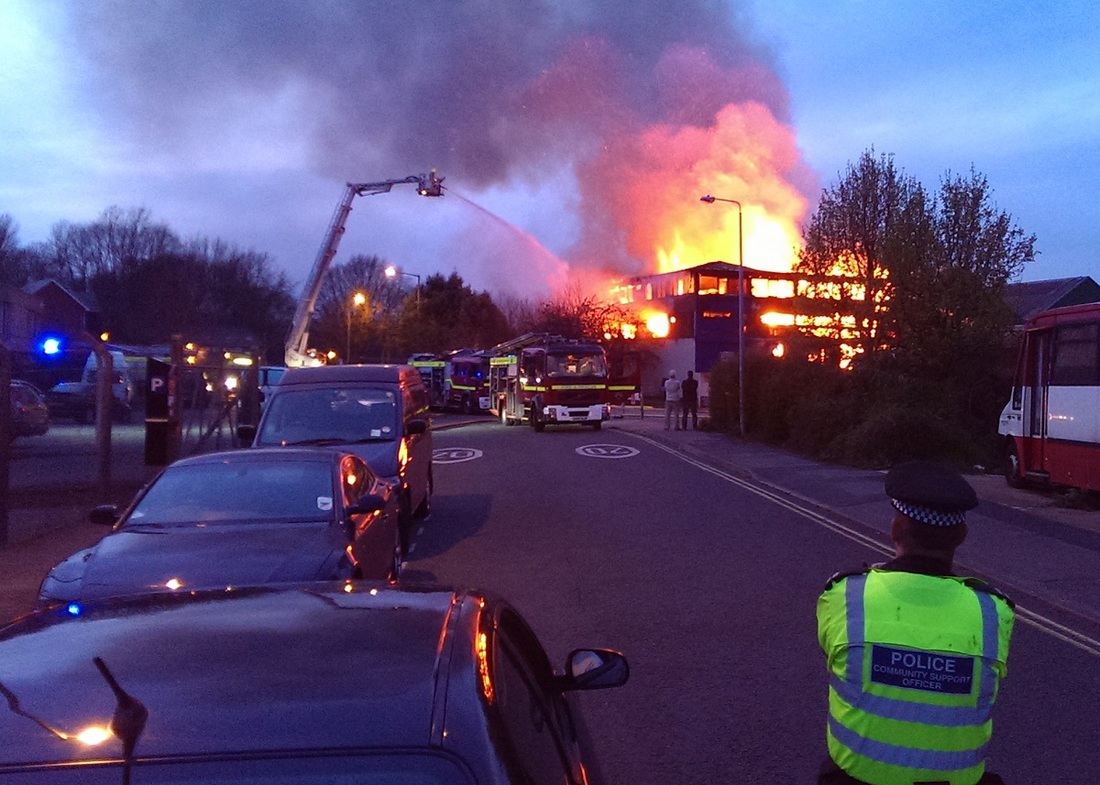
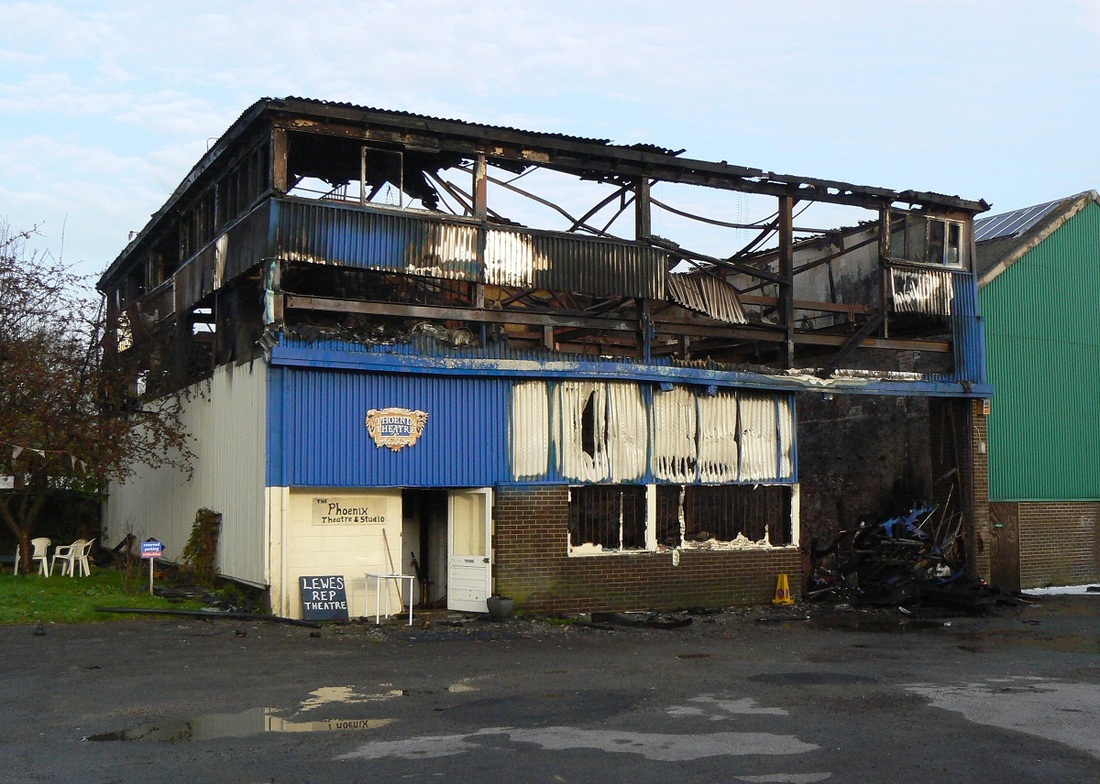
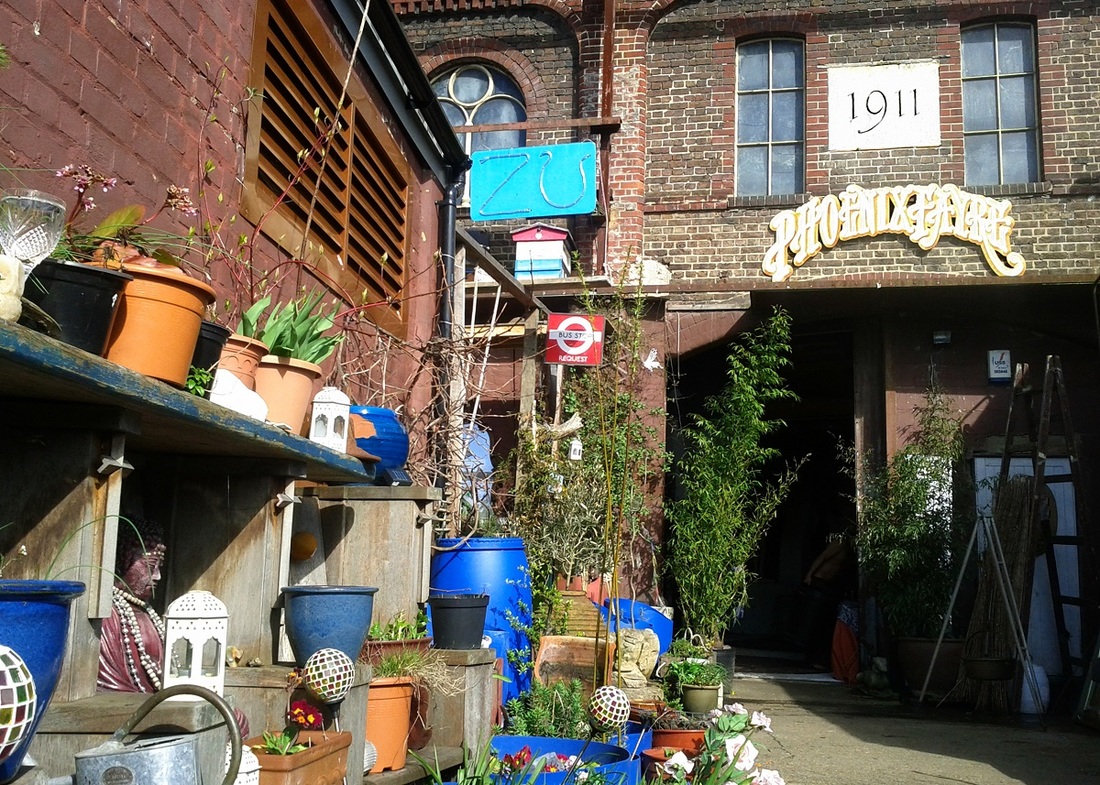
I first became aware of the Lewes North Street 'Phoenix' estate as an entertainment venue. As a collection of venues, really. Music, films, performance, street food... there seemed to be a lot going on. Then, one Saturday evening at the end of March 2014, I knew it as the site of a fire that destroyed the Phoenix Theatre and its associated studios. A local newspaper phoned me on Sunday morning to see if I'd give them one of my photos of the blaze. "Give?", I asked. "Not even a tenner?" And that's why my photo didn't end up in print.
 
In many ways, the destruction of the theatre - from an accident involving a wood-burning stove, it was reported - appeared to catalyse local interest in the site. Back in 2012, many of the buildings had been acquired by the Santon Group and MAS for redevelopment. Their plans were shared as part of a public consultation process that started in 2013. But these plans didn't meet with everyone's approval: Lewes Phoenix Rising was set up in 2014 to propose an alternative scheme that involved renovating some of the Phoenix Ironworks buildings.
 
Earlier this year came a commission from my friends at Viva Lewes magazine. Would I be interested in writing a series or articles about the various parties involved with what was being called the 'North Street Quarter'? Definitely: it was a story I wanted to learn more about, despite my fear that dealing with rival groups could turn out to be a poisoned chalice. So, on a cold but sunny morning in March, I met Rob Blackman, the leader of Lewes District Council, and Clive Wilding of Santon.
 
They'd just revealed their proposals, which included 416 new homes, new workspaces, a health centre, additional flood defences for the town and access to the river bank. Rob was there because Lewes District Council owned around 30% of the North Street site, with the Santon/MAS partnership - now a separate company called Santon North Street - responsible for the rest. As I marvelled over the intricate wooden model of the proposed development, I looked for an opportunity to crack a joke about him doing a deal with the devil.
 
The joke didn't happen. Rob seemed genuinely concerned about trying to do the best thing for the people of Lewes. Both he and Clive gave me considerably more time than they'd scheduled. A cynic might suggest it was in their interest to do so. I think they were genuinely keen to tell their story. Well, either that or my Columbo interviewing technique was unusually effective. "Just one last thing..."
 
The following month I met Chelsea Renton of Lewes Phoenix Rising over a cup of coffee. Two cups each, by the time we'd finished talking. We were in a small cafe, so I wasn't too surprised when one of the customers joined in to defend Chelsea when she was responding passionately to a particularly provocative question of mine. Afterwards she showed me around one of the former Phoenix buildings, which housed the Foundry Gallery and several manufacturing businesses as well as her own art studio. Yes, that same cynic might suggest it was in her interest to spend time with me. I think it came from a genuine desire to promote the people who worked on the estate.
 
Just a few days after my meeting with Chelsea, Lewes Town Council (not to be confused with land-owning Lewes District Council) objected to the Santon/LDC planning application. Councillor Susan Murray, who chaired the town council’s planning committee, told me that many of their concerns were about the loss of existing employment and the affordability of housing. She also revealed that nearly all of the planning committee were supporters of Lewes Phoenix Rising. Although the town council's decision wasn't final -  that decision was being made by the South Downs National Park Authority - it would need to be considered by the SDNPA.
 
In May I was busy researching concerns about flooding. Some residents from the Pells area told me that Santon had effectively gone back on a promise. They said Santon's current planning submission showed that Pells-area flood defences wouldn't be completed until phase 3 of the development, despite earlier assurances this would happen during the first phase. After contacting Clive Wilding of Santon North Street, he responded with proposals to amend the planning application and bring forward some of the Pells flood defence work. In the Hollywood blockbuster version of my story, there'd be a headline of 'Local reporter's investigations prompt u-turn'... but I doubt that's what really happened.
 
And so, eventually, decision day arrived for application SDNP/15/01146/FUL. Thursday 10th December 2015. Because Lewes is part of the South Downs National Park, the final decision needed to be made by the South Downs National Park Authority. Such was the amount of local interest, they came to Lewes for their final meeting instead of holding it in their Midhurst headquarters. Thirteen people would be permitted to speak: some members of the public opposing the application and some supporting the application, as well as town, district and county councillors. Each would have a maximum of three minutes to make their points.
 
Even before things got started, there was a bit of a clue about the way the meeting would go: the Planning Committee had been given an 82 page document from the Park Authority's Director of Planning, recommending approval of the application subject to a number of terms, which included ensuring that 40% of homes are affordable, getting over a million pounds spent on recreation facilities and spending over £600,000 on creative workspaces. The document had been published on the SDNPA website in the week before the meeting.
 
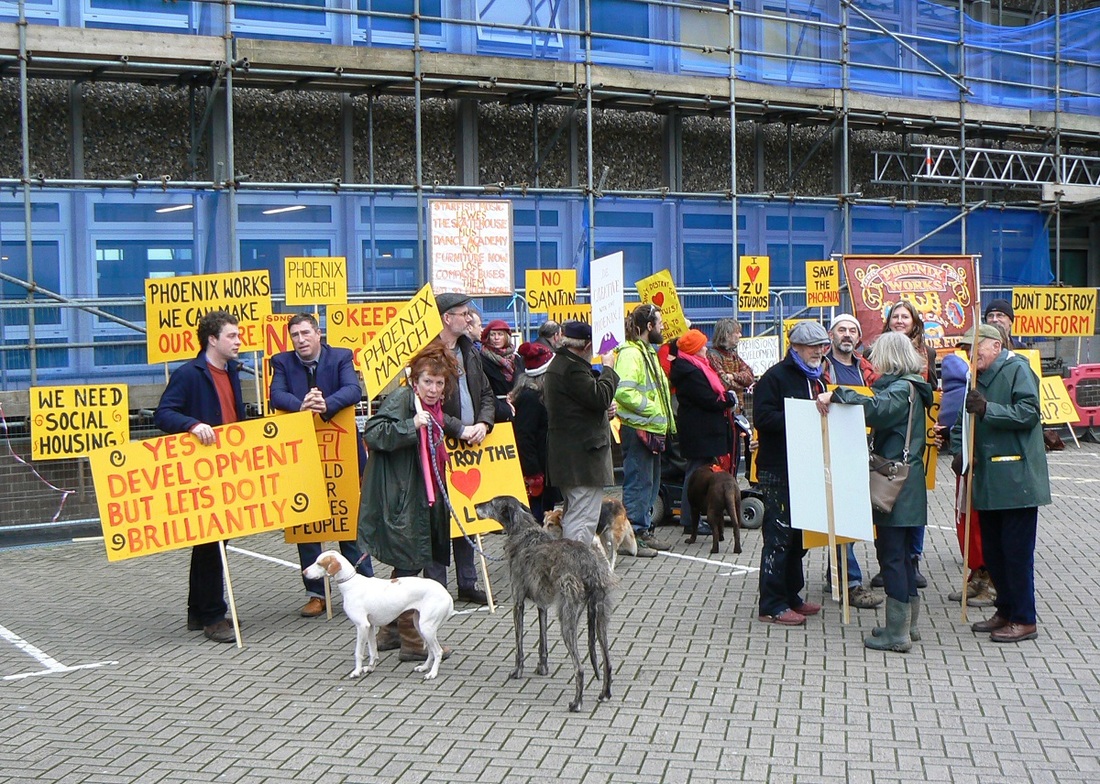
A friendly crowd of Phoenix Rising campaigners was greeting people outside as they arrived for the planning meeting. There was singing, there were placards and there were a few dogs (neither holding placards nor singing). Inside, everything ran smoothly. SDNPA case officer Stephen Cantwell presented the application before the discussions started. The only minor hiccups came when Chelsea Renton overran her allotted three-minute speaking time and John Chaplin of Lewes Tree Group insisted he would only address the committee when standing up. No protests, no shouting, just the occasional mutter, tut and sigh from both sides of the debate.
 
After four hours of presentation, questioning and discussion, the meeting was concluded. Committee chair Neville Harrison quoted Thomas Paine - 'a moderately good thing is not as good as it ought to be' - and Voltaire - 'the best can be the enemy of the good' - before asking the committee to vote on the proposal. It was, he said, "not perfect" but "pretty good". The committee agreed unanimously to approve the plans, although there are many conditions that will need to be confirmed and met before development can start.
 
Margaret Paren, who chairs the South Downs National Park Authority, said "This is a major application which our planning committee has considered in detail - listening closely to all viewpoints. We recognise that our decision won't be universally welcomed but we believe that it offers the best possible use of this brownfield site for the future of Lewes and the people who live here, including much-needed flood defences and drainage for the whole town and space for recreational facilities."
 
What next? The whole project will take around six years to finish. For the 'phase 1' part of the site, there'll be demolition in 2016 to make way for the first phase of the development. This is expected to be completed in about two years. Tenancies will end, businesses will need to move, those people who are living on the site will need to find somewhere new. I don't know what the Lewes Phoenix Rising group is going to do, although I imagine its members will be watching closely to ensure all the SDNPA's conditions are met and to see how the £1,145,000 for recreation facilities and the £640,000 for Creative Workspace provision and subsidy is spent.
 
There's also another potential site nearby that could be redeveloped soon: Waitrose and the derelict Wenban-Smith timber warehouse behind it, plus the bus station. Lewes District Council's proposed joint core strategy talks of this 'Eastgate' site being "a potential area for redevelopment with the priority being for the retention of a major foodstore and introduction of a replacement bus interchange". When I spoke to Clive Wilding in March, he told me a planning application from Waitrose was expected by the end of 2015. That timing now seems unlikely... but it may not be long before Lewes is debating another major development in the town centre.

Some enchanted evening...

1/12/2015

0 Comments

 
Picture
Robin Morley is hoping to introduce a new annual Lewes tradition. He's one of the directors of Enchanted Places, a company that can trace its roots back to the outdoor arts events he produced at Zap Productions as part of Brighton’s renowned Zap Club. Together with a partnership of other creative people, Robin is turning Grange Gardens into an ‘enchanted park’ this month. But what exactly does that mean?
 
"Southover Grange Gardens is one of the jewels of Lewes - and we plan to make it really sparkle", he tells me. Ross Ashton, fresh from transforming Durham Cathedral as part of the city’s Lumiere Festival last month, will produce a projected artwork that’ll animate the façade of Southover Grange. Sussex-based filmmaker Nick Driftwood is creating two new video works. The park’s trees and sculptures will be illuminated as well… but there’s much more to the show than beautiful visuals, as Robin explains. “For example, we're presenting 'calling birds', which is a digital mask that you put your face in. There'll be three or four of them. You say your wish for the season and the bird mimics your voice.”
 
Wishes are the overall theme for this first Lewes event, Robin says, encouraging people to reflect on the previous 12 months and their aspirations for the future. Robin’s own wishes are very much focussed on his audience. “As always, the challenge for a producer is to make it really exciting and to have those 'wow' moments. That what we're working hard to do.”
 
Although this will be the first year that Lewes has had an Enchanted Park, the concept has already proven successful elsewhere. The Enchanted Parks show that Robin developed and produced in Gateshead is currently celebrating its tenth anniversary, selling all 22,000 tickets in just 24 hours. It seems the biggest local challenge for Robin is spreading the word without giving away all his secrets. “We plan for this to be an annual event every December”, he says. “The first year is always the hardest, we know that. We expect the first week to build modestly, and then the second week to capture people's imaginations. You have to see it to understand it.”
 
Visitor numbers will be monitored carefully to ensure everyone can enjoy their visit, with people allowed to enter the park in 15 minute time-slots. It’s rather like an alternative to a Christmas pantomime, Robin tells me, suitable for families, for couples and for groups of friends. “If you went to the Theatre Royal in Brighton to see a show at Christmas, you’d sit in a seat and watch the magic unfold on the stage in front of you. If you come to Enchanted Park Lewes, you're on the stage, in the show. You're immersed in it.”
 
Tickets available from enchantedparklewes.co.uk; open from 4.30pm Wed 2 – Sun 6 and Wed 9 – Sun 13.
 
First published in Viva Lewes magazine issue 111 December 2015

0 Comments

Jonathan Ritchie: Waitrose wine expert

1/10/2015

0 Comments

 
Viva Lewes
Imagine a place where you're only a few miles from a handful of vineyards. Where the geography conspires to create award-winning fizz. Where even the local supermarket employs a wine expert. Am I in the Loire valley? The mountains of Catalonia? The hills of northern Italy? No, I've not even left Lewes.

I'm in the company of Jonathan Ritchie, one of the wine experts employed by Waitrose. He’s particularly well qualified for the role: 30 years an hotelier, 10 years a publican and "an unhealthy interest in alcohol since I left hotels", he says with a smile. “When I retired, this was a natural progression. I'd never have worked for any other store.”

Jonathan hands me a map that shows over 160 vineyards across England, including a distinct cluster here in the south eastern corner. “Waitrose tend to support local producers”, he explains, pointing out sparking wine from Breaky Bottom, Chapel Down, Nyetimber and Plumpton on the shelves. “Breaky Bottom, which is without doubt our best seller, is made literally down the road at Northease. It’s fantastic. I drink it on high days and holidays.” Production is influenced by the ‘terroir’ – the combination of climate and soil – with our local blend of sunny weather and chalky ground often compared to the Champagne region of France.

But how do you appreciate a bottle of wine? First of all, it’s important to know what you’re drinking. “British wine can be made with grapes from anywhere in the world”, Jonathan warns me. “English wine is made with grapes that are grown here.” It’s also a question of matching your wine with the food you’re eating. “That’s the question we get asked the most: will this wine go with this, or what food should I serve with this wine? Some wines work well with food, some wines can be drunk on their own. People say ‘I don't like Sauvignon Blanc’ – it’s very acidic, it’s very dry – but it works well with curry. Have it with the right food and it becomes a different wine altogether.”

The techniques of tasting only come with experience, Jonathan says, although the acronym BLIC is a useful reminder to look for Balance (all the elements of the wine working together), Length (how the flavours linger), Intensity (the power of the flavour) and Complexity (the variety of aromas and flavours). “You smell it, you look at it to make sure it's clear, you swirl it around and see how the wine hangs to the glass.” He also points out that different parts of your mouth detect different characteristics: sweetness is felt more strongly towards the tip of your tongue, while bitterness is detected towards the back.

Yet even with his decades of knowledge, Jonathan acknowledges that total wine expertise is beyond any person. “You'll never, ever know it all”, he reassures me. “I learn things from customers every day. And hopefully they learn things from me!”

Waitrose, Eastgate Street. 01273 486286. waitrose.com

First published in Viva Lewes magazine issue 109 October 2015

0 Comments

Fit To Be Tied?

1/9/2015

0 Comments

 
The people of planet Earth have sent spaceships across billions of miles. We’ve turned sunlight into electricity. We’ve built phones that can send video messages in an instant. So why are we still tying our shoes on with bits of string, much like our medieval ancestors?  

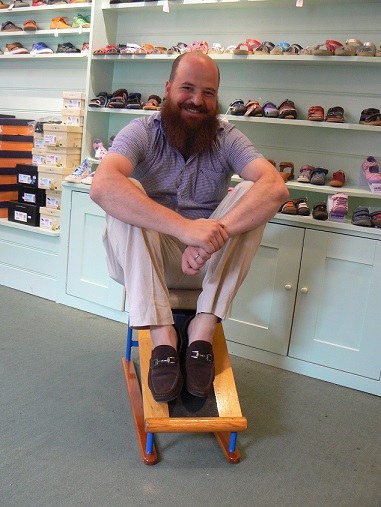
“Because it’s the best way of fastening them”, Andrew Elhinn tells me. He manages the Shoe Gallery and has become something of a shoelace expert. Glancing at my feet, he proclaims “Your boots are laced in the half-bar style, which looks smart and also offers support. But they’re a bit narrow.” I feel as though I’ve met the Sherlock Holmes of footwear.  

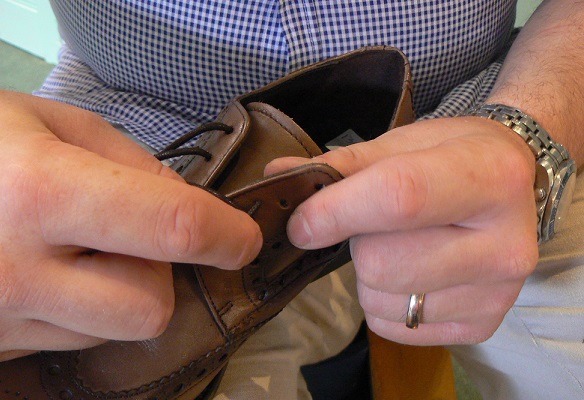
Apparently ‘barred’ or ‘military’ lacing was designed to be opened quickly with a knife if the wearer’s foot was injured in battle. The half-bar keeps the smart military look but offers more support for your feet, which is why most shoes are laced this way. And then there’s criss-cross lacing, favoured for hiking boots and sports shoes, with extra support but without the symmetry.  

When it comes to tying laces, Andrew prefers the simple bow knot. “I really struggle with the ‘bunny ears’ style”, he admits. “Very few people do a double-knot, even though I often hear them complaining that their shoes keep coming undone. It’s even possible to tie your laces one-handed”. And, if you’re particularly keen on becoming a shoe-tying expert, you can find YouTube videos dedicated to securing your shoes in a couple of seconds.

Traditional English laces were waxed, giving them a much thinner look than the unwaxed cotton laces used in many shoes today. Yet it’s not just a question of style. “The wax sticks together and helps them stay tied. If your shoelaces keep untying themselves, a little bit of shoe polish helps stop them from coming undone.” Today there are curly ‘cheats’ laces that can simply be twisted together, saving the hassle of a proper knot. And there’s Velcro, which does an acceptable job but isn’t to everyone’s taste.

“Laces are seen as grown-up”, Andrew says. “With children’s shoes, you get to a certain age and the boys want lace-up shoes. They’re too old for Velcro. It’s a major image thing.”  

Moving on from laces, Andrew offers me some tips about buying shoes. “Your feet never stop growing. They only slow down.” That’s particularly an issue for younger feet: it’s essential to leave room for growth (about a quarter of an inch at the end of a shoe) but it’s also important to buy a shoe that’s wide enough. “I’d say 80 per cent of people, adults and children, are wearing the wrong width of shoes. The easiest way to tell if your children’s shoes are the right size is to look inside and see the ‘shadow’ left by their foot. People usually only look at the outside.” An elementary mistake, not one that Sherlock Holmes – or Andrew Elhinn – would ever make.  

The Shoe Gallery, 45 High Street, Lewes. 01273 488011

First published in Viva Lewes magazine issue 108 September 2015
0 Comments

My Space: Ivan Morgan, Incredible Mechanicals

1/8/2015

0 Comments

 
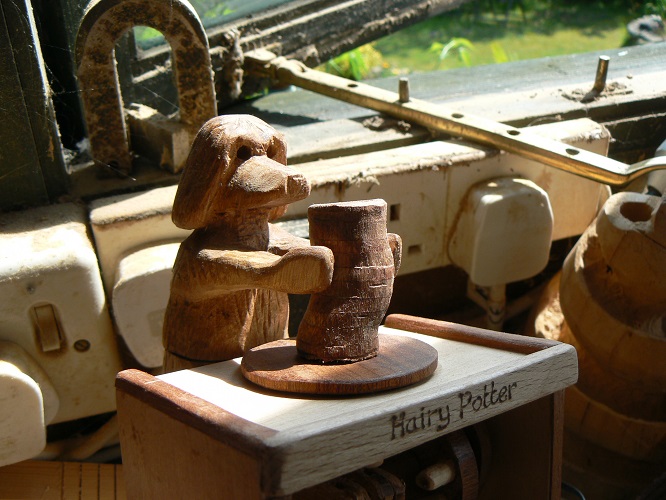
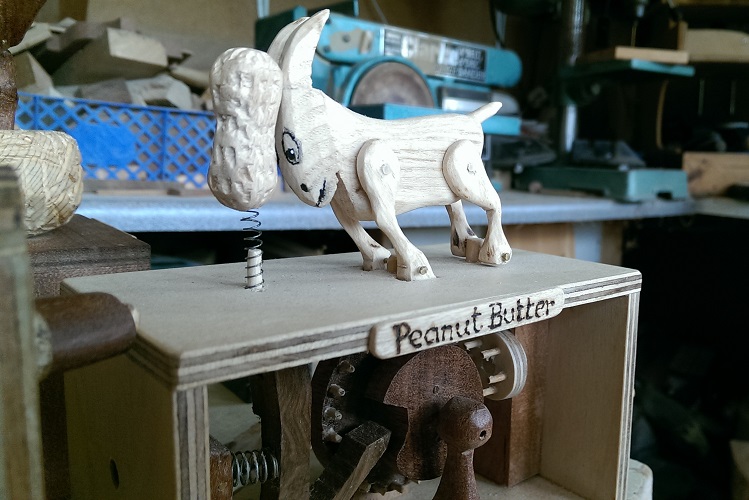
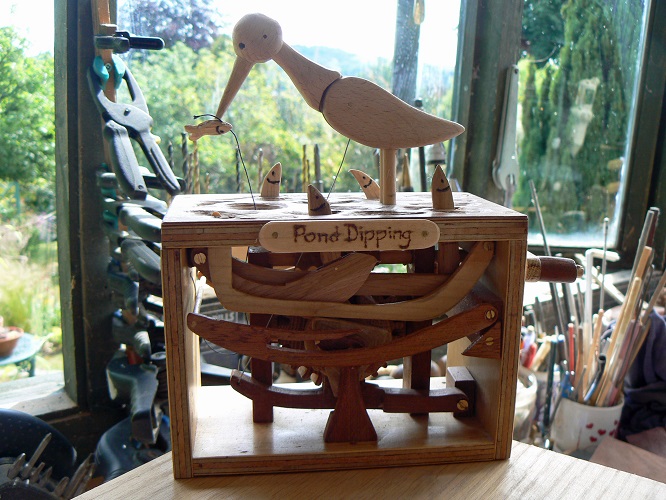
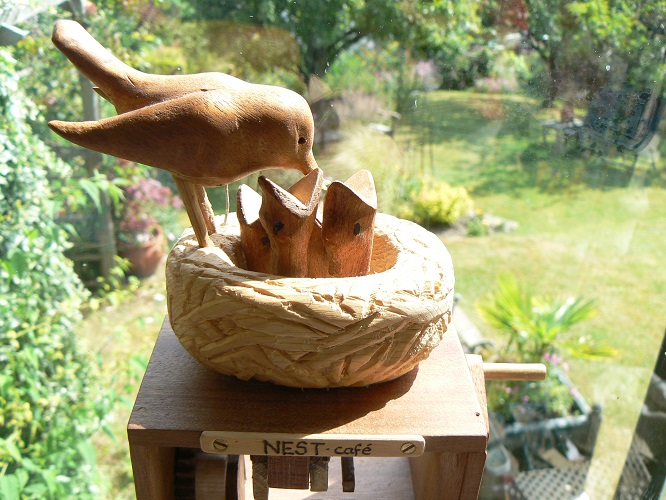
I've got 45 different mechanical models and will have most of them on display during August Bank Holiday weekend. Years ago I used to sell some but I don't now. For our Open House exhibition we have them in the conservatory and the dining room - and then you come into the garden for tea and cake.

I've always been practical and made wooden toys for my children. In 1997 I went to Covent Garden and saw the Cabaret Mechanical Theatre. It isn't there now but the people are still around [they have a touring show at Herstmonceux Observatory Science Centre this month] and that inspired me to make mechanical models.

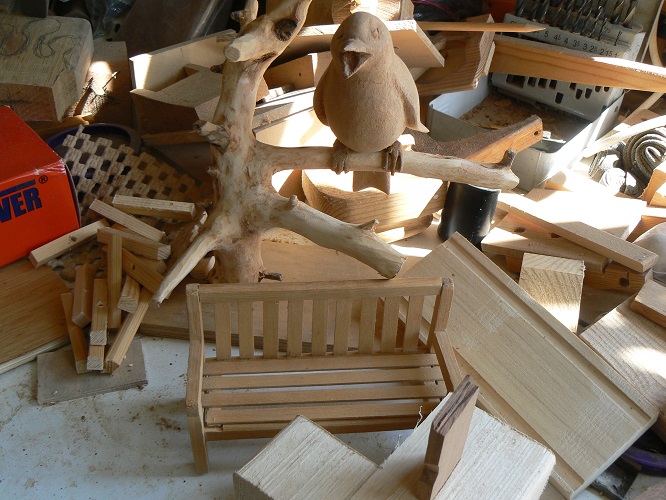
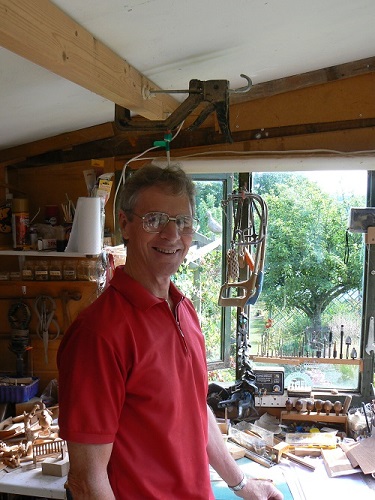
When I retired from the county council, I had a passion to sit and whittle in a shop window somewhere. But my dream fell apart when I realised how much that would cost. So I set up in the back of my garage with a scroll saw, a pillar drill and a sander. I have since built a lovely workshop in the garden with a panoramic view!

My most useful tool is my bandsaw. When I make cogs, I spray-mount the outline onto a piece of wood and cut all those little teeth out with the blade. It's brilliant but you have to keep your fingers out the way.

I've got a great stock of old bits of wood; it's all recycled, donated or off-cuts. I just have to buy a bit of 6mm dowel occasionally.

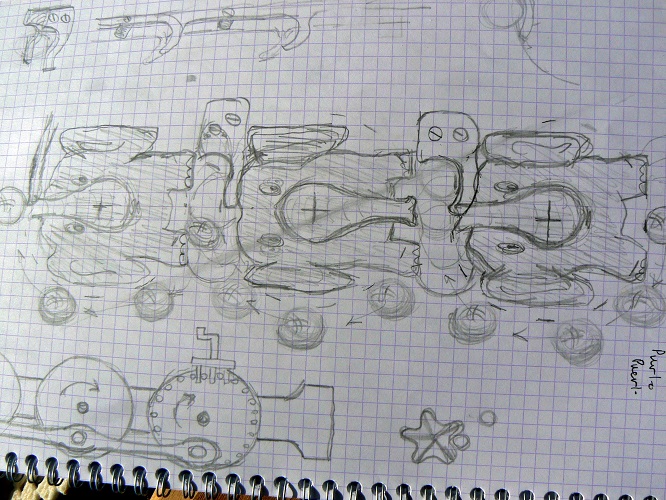
I very rarely draw plans before I start. I just sketch things out in my book. Sometimes I have a better idea when I’m making something and then change the design to get it working differently.

You can't really appreciate the models unless they're moving. I let adults and children operate them as long as they're careful. If anything gets broken it can always be mended. People love studying the models to see how they work. And that's what encourages me to carry on.

As told to Mark Bridge
21 Gundreda Road, Sat 29 to Mon 31, 2pm - 5pm.
positivelycreative.co.uk

First published in Viva Lewes magazine issue 107, August 2015.
0 Comments

Coming to Americana

1/7/2015

0 Comments

 
Picture
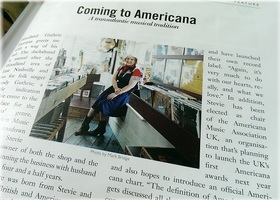
Woodland Guthrie Freeman greets me with a wag of his tail. The dachshund is named after the Woodland area of East Nashville and also for folk singer Woody Guthrie; a double indication that I've come to the right place for the 'Americana' genre. I'm at Union Music Store on Lansdown Place, where Stevie Freeman - co-owner of both the shop and the dog - has been running the business with husband Jamie for the past four and a half years.

Union Music Store was born from Stevie and Jamie's interest in British and American music, their holidays with friends in Nashville and their individual skills: he's a musician and songwriter, while her background is in retail. A dream of running a music shop "one day" became reality much faster than they'd expected, as she explains. "This beautiful little building came empty just as I had sold my old shop and so we thought 'let's do it now'. That's how it started."

The size of the shop forced Stevie and Jamie to think carefully about the music they sold. "It's very small, so we went for the genres that we love: folk, country, Americana. They're all entwined. We started with about 300 records; at the beginning it was mainly CDs but now it's an equal balance of CDs and vinyl." Most importantly, there's room for a tiny performance stage: a feature the duo had seen in Nashville's music shops and wanted to bring to the UK.

Since 2010, they’ve added more room for stock and have launched their own record label. “Again, it's very much to do with our hearts, really, and what we love.” In addition, Stevie has been elected as chair of the Americana Music Association UK, an organisation that's planning to launch the UK's first Americana awards next year and also hopes to introduce an official Americana chart. "The definition of Americana music gets discussed all the time", Stevie tells me. "It's constantly changing." She describes it as an expansion beyond folk and country music, "a bigger umbrella" that covers a spectrum from bluegrass to rock.

To give me a better understanding, Stevie’s been asking other people for their definitions as well. Del Day of Ark PR, a Lewes-based company that specialises in music publicity, also emphasises the broadness of Americana. "I'd say the genre has stretched beyond the confines of just a 'country' connection and incorporates a wide range of incredible music these days", he says. "I think we are gonna need a bigger church!"

But the most emotive description comes from Jed Hilly at the original Americana Music Association in Nashville. “If you can taste the dirt through your ears, that's Americana”, he says. It sounds like Lewes is a good place to get your ears grubby.

Union Music Store, 1 Lansdown Place. 01273 474053. unionmusicstore.com

First published in Viva Lewes issue 106 July 2015.


0 Comments

Shelter from the Storm

1/6/2015

0 Comments

 
Picture
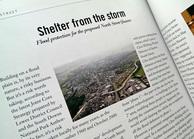
Flood protection for the proposed North Street Quarter

Building on a flood plain is, by its very nature, a risky business. But it's a risk worth taking, according to the latest Joint Core Strategy prepared by Lewes District Council and the South Downs National Park Authority. In fact, it's a risk that's been taken locally for many years, as the victims of the November 1960 and October 2000 floods will attest.

The proposed ‘North Street Quarter’ development by Lewes District Council and Santon North Street has put flood protection back in the news. As well as protecting their new houses and commercial properties, the developers plan to protect existing houses in the Talbot Terrace (Pells) area.

Paul Deane, a Lewes-based Chartered Civil Engineer who’s previously worked in Flood Risk Management for the Environment Agency, has taken an in-depth look at Santon’s Flood Risk Assessment. His comments, published on lewesphoenixrising.com, conclude “the proposed flood defences are broadly considered to be the best viable solution for this location.” But not everyone’s happy with the way those plans have progressed.

I talk to John Webber, a local resident and a member of the Pells Residents working group. He says Santon’s representatives assured him they would defend the Pells area during the first phase of any construction, yet their planning submission shows these defences won’t be completed until phase 3. Not only does the proposed development increase the risk of flooding, he tells me, but it also means the Pells defences wouldn’t be put in place if the development stopped after phase 2. John’s not the only person making these claims, which I put to Clive Wilding, Project Director of Santon North Street.

Clive describes the flood defences as being “phased in line with relocation and development plans”, noting that some businesses could be relocated from ‘phase 1’ – the part of the site due for imminent redevelopment – to buildings in the ‘phase 2’ area, enabling these people to remain on-site during the construction period. Apparently this would avoid clearing the whole site to implement all the flood defences in phase 1.

However, a potential compromise is now being suggested. In a statement, Clive Wilding tells me “following further discussions with Pells residents, we are proposing to amend the planning application to bring forward some of the Pells flood defence work so that it is protected from the west in phase 1 of the construction, this will protect Pelham Terrace housing and will go part way to assisting the area and will also allow the new landscaping and planting to settle quickly.”

Although the changes could benefit homeowners, they won’t protect the Pells Pool or the adjacent park; Santon says this protection can’t be completed “until our tenants in phase 3 are relocated into a new completed phase 1”.

Whether this reassures local residents depends on many factors, including an issue of trust: trust in the developer, trust in the calculations, trust in the construction. Those who remember the flooding of fifteen years ago are understandably nervous.

northstreetqtr.co.uk

First published in Viva Lewes issue 105 June 2015.


0 Comments

Reviving the Phoenix

19/4/2015

 
Viva Lewes
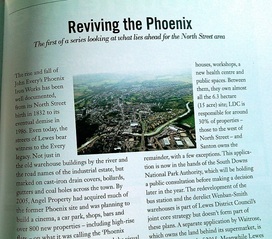
A look at what lies ahead for the North Street area of Lewes

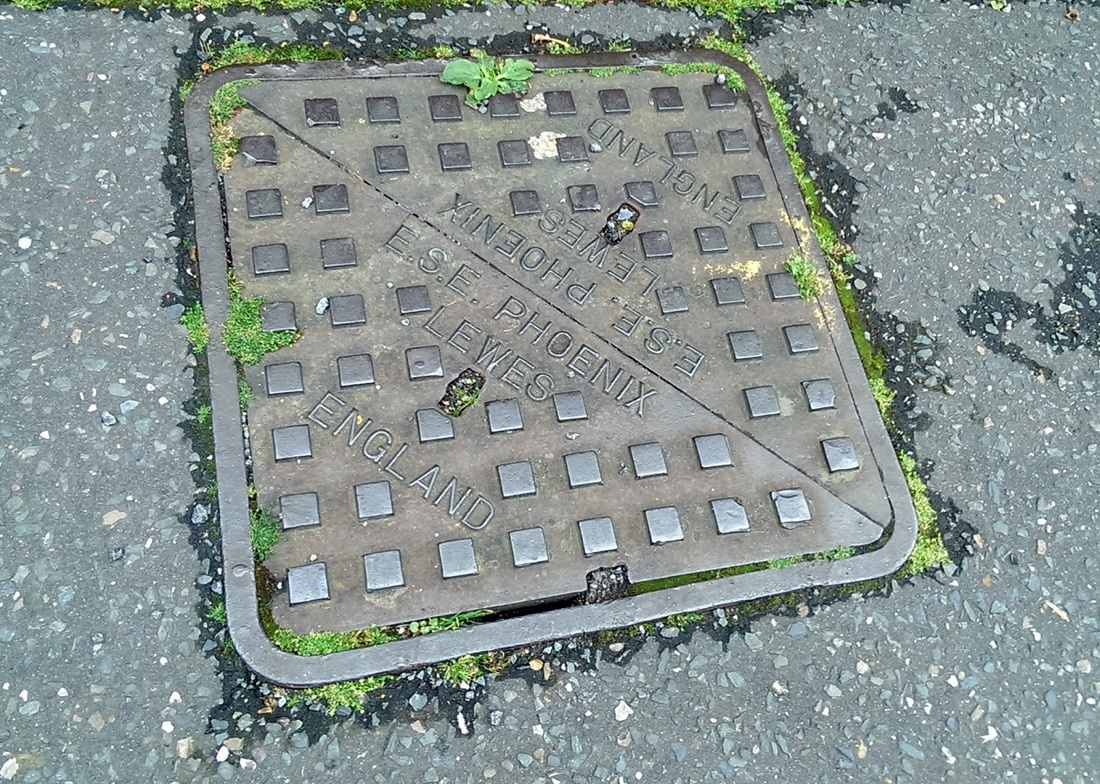
The rise and fall of John Every’s Phoenix Iron Works has been well documented, from its North Street birth in 1832 to its eventual demise in 1986. Even today, the streets of Lewes bear witness to the Every legacy. Not just in the old warehouse buildings by the river and the road names of the industrial estate, but marked on cast-iron drain covers, bollards, gutters and coal holes across the town.

By 2005, Angel Property had acquired much of the former Phoenix site and was planning to build a cinema, a car park, shops, bars and over 800 new properties – including high-rise flats – on what it was calling the ‘Phoenix Quarter’. Revised plans later reduced the visual impact of the development, but little progress was ever seen because Angel Property went into administration in 2009. Yet the property crash that claimed Angel wasn’t bad news for everyone. Angel’s reported £27 million investment became a bargain buy for the Santon Group and investment business MAS, which apparently paid significantly less for the site in 2012. As well as submitting new plans for the area, they’re proposing a new name: the ‘North Street Quarter’. Since then, consultations have been held, opinions have been gathered and campaigns have been waged.

Which brings us to today. Or, more correctly, to the middle of March, when Lewes District Council (LDC) and Santon North Street Ltd jointly submitted a planning application that included 416 houses, workshops, a new health centre and public spaces. Between them, they own almost all the 6.3 hectare (15 acre) site; LDC is responsible for around 30% of properties – those to the west of North Street – and Santon owns the remainder, with a few exceptions. This application is now in the hands of the South Downs National Park Authority, which will be holding a public consultation before making a decision later in the year.

The redevelopment of the bus station and the derelict Wenban-Smith warehouses is part of Lewes District Council’s joint core strategy but doesn’t form part of these plans. A separate application by Waitrose, which owns the land behind its supermarket, is expected by the end of 2015.

Meanwhile Lewes Phoenix Rising Ltd, a community development company set up last year, is raising £20,000 to submit its own plan for 3.5 acres of the site. Although it doesn’t own the land, it wants to propose “an exemplary scheme” to be considered alongside the Santon/LDC submission. Instead of demolishing all the old warehouses, it’s suggesting 48 rental homes along with work and social enterprise space within renovated Phoenix Ironworks buildings.

In the next few months we’ll be taking a closer look at the area, the planned North Street Quarter development and the alternatives that are being proposed. We’ve already spent time with Lewes District Council and Santon – there’ll be more details of that conversation in next month’s magazine – and look forward to talking to other interested parties.

First published in Viva Lewes magazine issue 103 April 2015.

My Space: David Bland, Flint Owl Bakery

2/4/2015

 
We’ve been in this building since around 2010. I wanted to have the bakery in Lewes but couldn’t find any suitable buildings. And then I spotted this little unit in Glynde. 

Our building is the old dairy. I think this was the bottling room, which is why it’s on a slant. Underneath there’s a deep bunker with thick brick walls, where they’d store the milk.

My first customer was The Ram in Firle, so they’re our oldest friends. Today we cover an area from Alfriston, across to Haywards Heath and down to Brighton. We supply around 30 food businesses: restaurants, gastro pubs, cafes and farm shops, plus our own shop in Lewes.

In my 20s I went travelling a lot. I loved travelling around Scandinavia and started eating such characterful breads. When I got the travelling bug out of me, I wanted to learn a craft – and found I was good at baking. I love it.

Someone’s usually here from 8pm and we bake until around 8am. Then the kitchen opens, preparing food for the shop. Friday night’s the big night, so we start earlier. We could bake up to 1,500 loaves, plus cakes and tray bakes.

Essentially we’re making bread the old-fashioned way. We’ve got linen cloths, a mixer, a wooden table and an oven. And our hands.

All the bread is made from our own blend of flours. We might call a loaf ‘white’ but really it’s white with a bit of light rye, a bit of malt… That’s how we produce distinctive products. All those little changes will adjust the flavour.

Sunday is the only day we’re shut. We work Sunday night but don’t work on Saturday night. It’s always been that way. I like to see my kids on a Sunday.

As told to Mark Bridge

209 High Street. 01273 472769.
flintowlbakery.com


First published in Viva Lewes magazine issue 103 April 2015.
<<Previous
Forward>>

    Recent work

    Examples of my published work, with the most recent shown first. (Any links via Amazon may earn me commission on any purchases.) 

    Archives

    February 2020
    August 2019
    June 2019
    May 2019
    April 2019
    January 2019
    November 2018
    September 2018
    June 2018
    May 2018
    April 2018
    November 2017
    September 2017
    April 2017
    March 2017
    December 2016
    October 2016
    September 2016
    June 2016
    May 2016
    April 2016
    March 2016
    February 2016
    January 2016
    December 2015
    November 2015
    October 2015
    September 2015
    August 2015
    July 2015
    June 2015
    May 2015
    April 2015
    March 2015
    February 2015
    January 2015
    December 2014
    November 2014
    October 2014
    September 2014
    August 2014
    July 2014
    June 2014
    May 2014
    April 2014
    March 2014
    February 2014
    January 2014
    November 2013
    October 2013

    Categories

    All
    Art
    Comedy
    Interview
    Journalism
    Lewes
    Music
    Technology

    RSS Feed

Powered by Create your own unique website with customizable templates.